

This week’s Science Gets Literal illustration focuses on the Control Group.
The image imagines participants calmly sitting behind observation glass while researchers watch from the other side. Nothing dramatic is happening. And that is precisely the point.
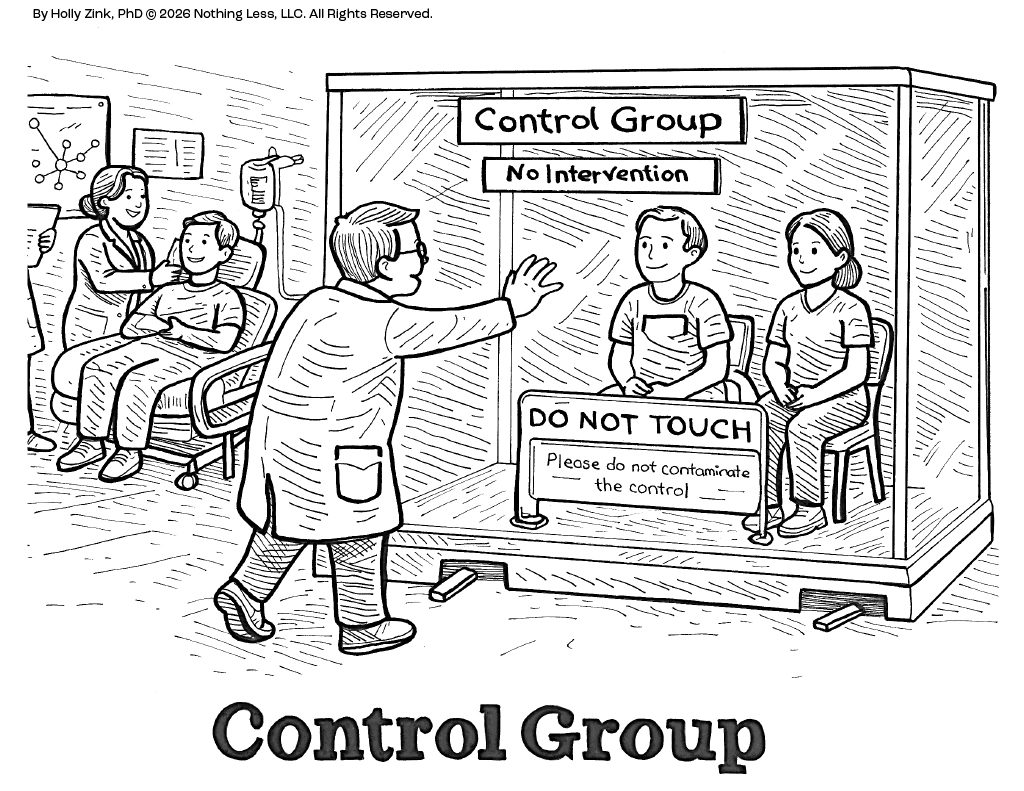
In research, control groups provide context. They allow us to determine whether observed changes are actually caused by an intervention or whether they would have occurred anyway.
The concept may seem straightforward, but it reflects one of science’s most powerful principles: meaningful understanding often requires comparison.
We live in a culture that tends to celebrate action. New initiatives, new technologies, and new interventions attract attention. Yet scientific rigor depends on the discipline to ask an important question: Compared to what?
The control group reminds us that progress is not measured in isolation. Understanding emerges when we place observations within a broader context.
Sometimes the most important role in a study belongs to the group that changes the least.
Science Gets Literal is an ongoing illustration series that explores scientific concepts through visual wordplay. Each piece begins with a familiar scientific term and asks a simple question: “What if we took that phrase literally?” My hope is that these drawings remind us that curiosity, creativity, and joy remain essential parts of discovery.


